
What are the signs of separation anxiety?
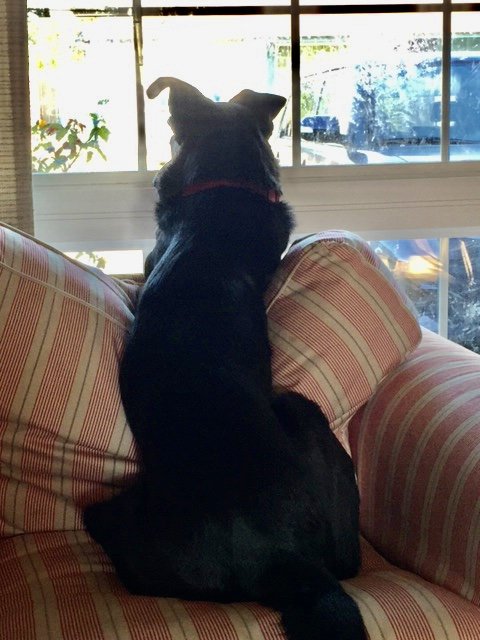
Living with a dog who panics when you leave is incredibly exhausting, isolating, and heartbreaking. You are not alone, and you did not cause this. To help you protect your shared peace of mind and your dog's emotional safety, we need to look closely at how panic truly shows up. Below is a list of both the obvious and the subtle signs that your dog is struggling to feel secure.

The “BIG” signs of separation anxiety*:
Excessive barking, whining, crying, and howling
Chewing or destroying items, floors, walls, and doors, particularly around entrances
Frantic attempts to escape, sometimes to the point of self-harm
Peeing or pooping inside the house (especially when the dog is otherwise house-trained)
Getting anxious well before the pet parent leaves
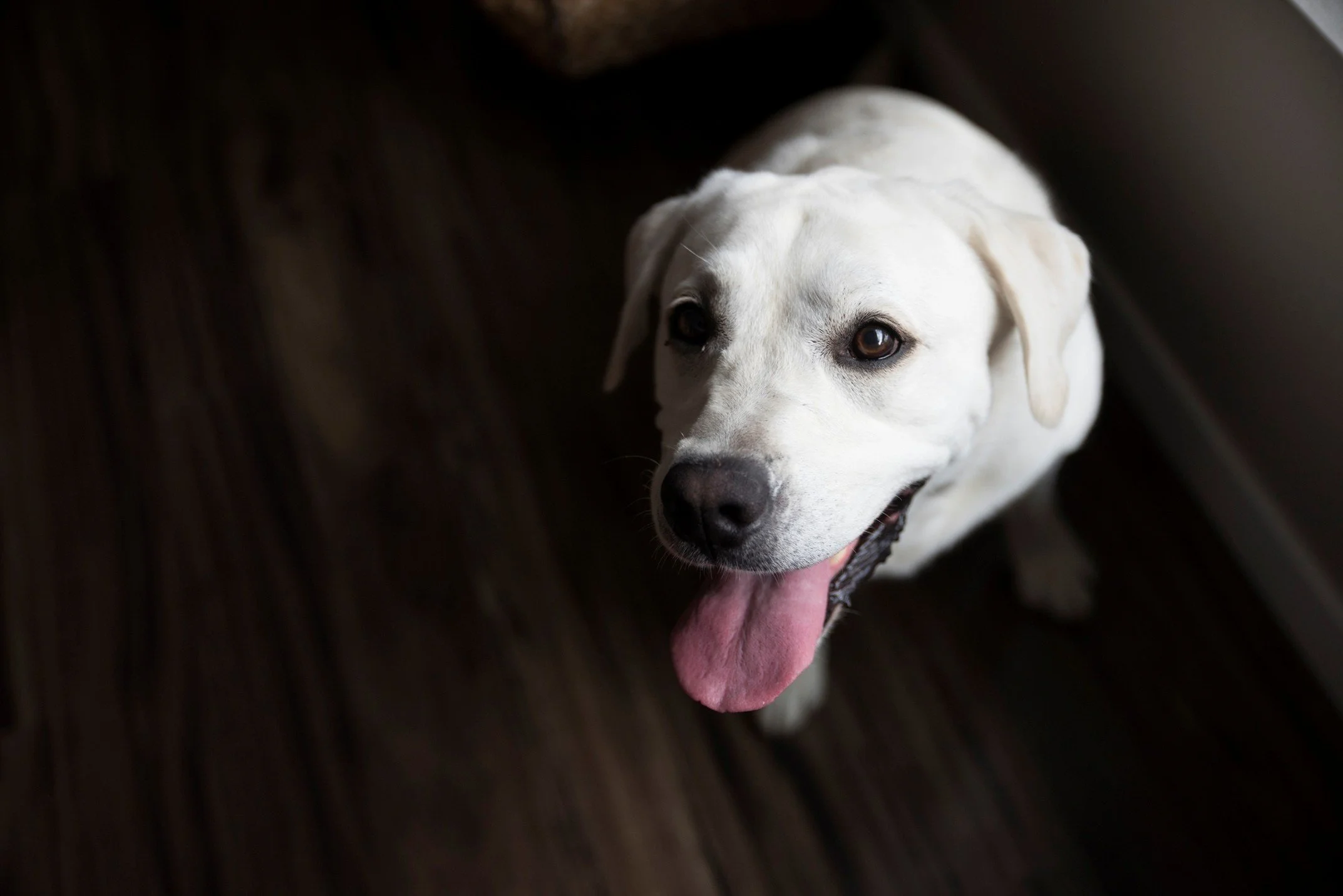
The less obvious signs of panic:
Licking/grooming
Panting or heavy salivating when it is not hot
Pacing, trembling, or hiding as you move around the house
Whining, low-level crying that goes unnoticed by neighbors
A tightly tucked tail, cowering, or freezing
Eyes wide, ears pinned back, fast blinking
This Photo by Unknown Author is licensed under CC BY-NC-ND
Displacement Behaviors
Displacement behaviors are normal dog behaviors that happen completely out of context. They are early whispers that your dog is starting to feel unsafe.
Examples of displacement behaviors:
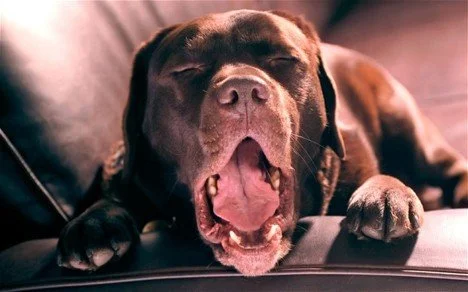
Yawning when not tired or waking up
Lip licking/tongue flicks when no food or water has been or is about to be consumed
Scratching themselves
Shaking off when not wet or dirty
Air humping/humping people, dogs, items
Sniffing/suddenly sniffing the ground
Excessive licking/self-grooming
Jumping up on their humans
Mouthing/nipping their humans
Stretching
Sneezing
Could physical discomfort be fueling the panic?
Sometimes, a dog's separation anxiety is intensified by hidden physical pain. If your dog cannot get physically comfortable, it is much harder for them to feel emotionally secure when left alone. If you suspect pain might be part of the puzzle, explore our Dynamic Dog Assessment Page to see how we can uncover hidden discomfort together.
Common Myths About Separation Anxiety
Myths abound about what works to help dogs with this panic disorder. One quick spin around the internet shows this. Here are three common myths that you’ve probably heard:
MYTH: It's your fault your dog has separation anxiety because you ____________.
TRUTH: We actually don't know what causes separation anxiety. Recent data that suggests that it may be genetic for some dogs (we know fear can be genetic). It's normal for dogs to want to be with their special humans. After all, we have bred them for thousands of years to be near us. Know that you haven't caused your dog's separation anxiety by doing things like letting them sleep in your bed or by spending too much time with them.
MYTH: Give your dog a KONG/chew/other food when you leave.
TRUTH: Using food with dogs who are suffering from separation anxiety does not alleviate separation anxiety and is at best a management tool for their human's very brief absences. Once the food is gone, the dog will start to panic. These items can also become a poisoned cue for the dog and they may stop taking these items at all times because they are associated with their human leaving. Save KONGs, chews, and other food puzzles for enrichment when you are home, not absences.
MYTH: Confine your dog in a crate when you leave.
TRUTH: Confinement can actually worsen the panic & fear of many dogs with separation anxiety. Some dogs will injure themselves trying to get out of the crate. Dogs with separation anxiety typically do better when they have more space rather than less.
*SA Pro Resources, Julie Naismith, Subthreshold Training


